
Interventii chirurgicale
Chirurgie oncologică personalizată (minim invazivă și robotică): cancer de rect, cancer de colon, cancere ginecologice, metastaze hepatice si peritoneale (HIPEC, PIPAC)
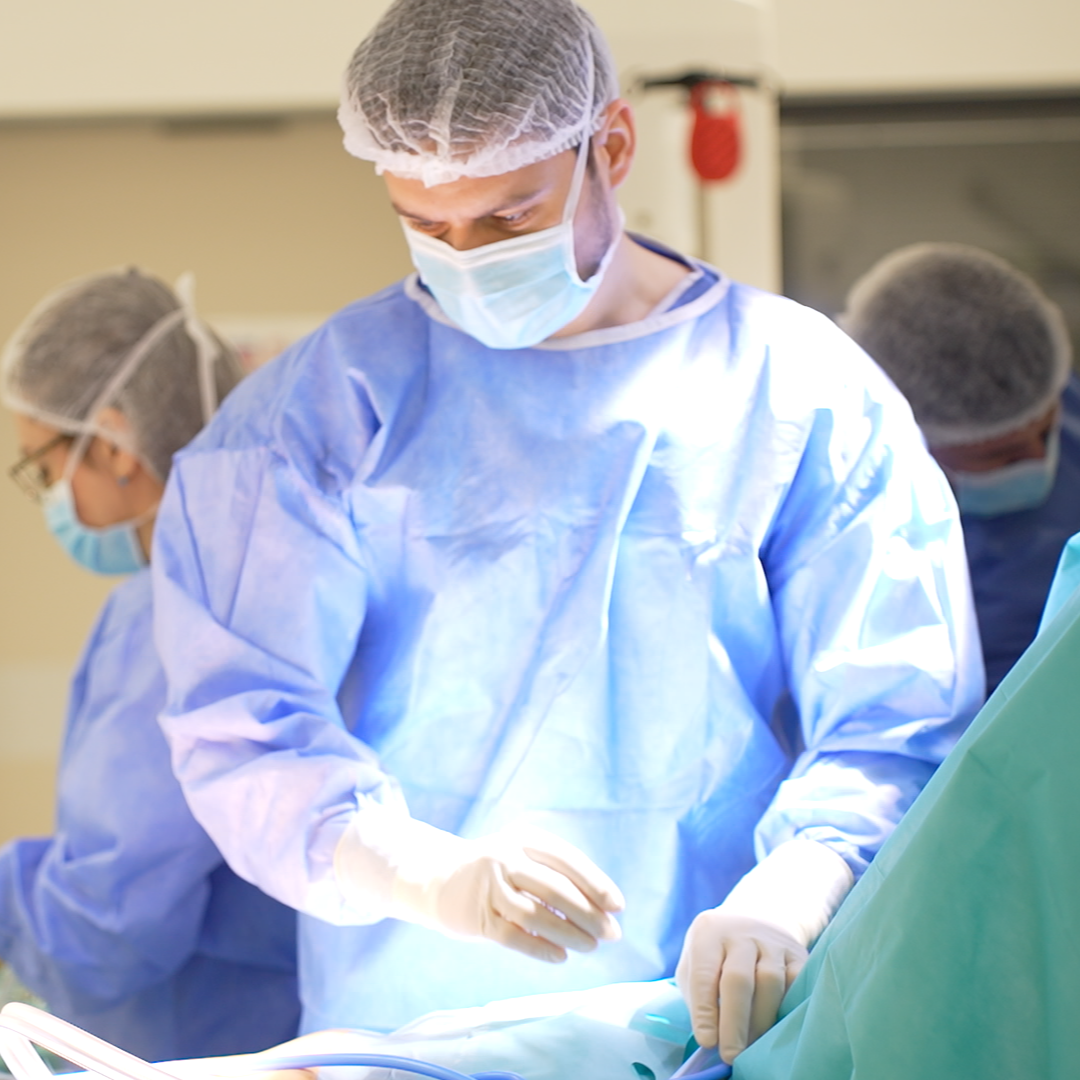
The right steps. The right decisions. A safe operation.
In colorectal and gynecologic-oncological surgery, the outcome doesn't depend on simply "operating" — it depends on choosing the right steps and making the right decisions during the operation itself. For that, the experience accumulated as a team is essential. Our goal is to give every patient a safe operation that genuinely increases the chance of overcoming the disease: rigorous oncological surgery with complete removal of the tumor (whenever possible), followed — when necessary — by complementary treatments and careful monitoring.
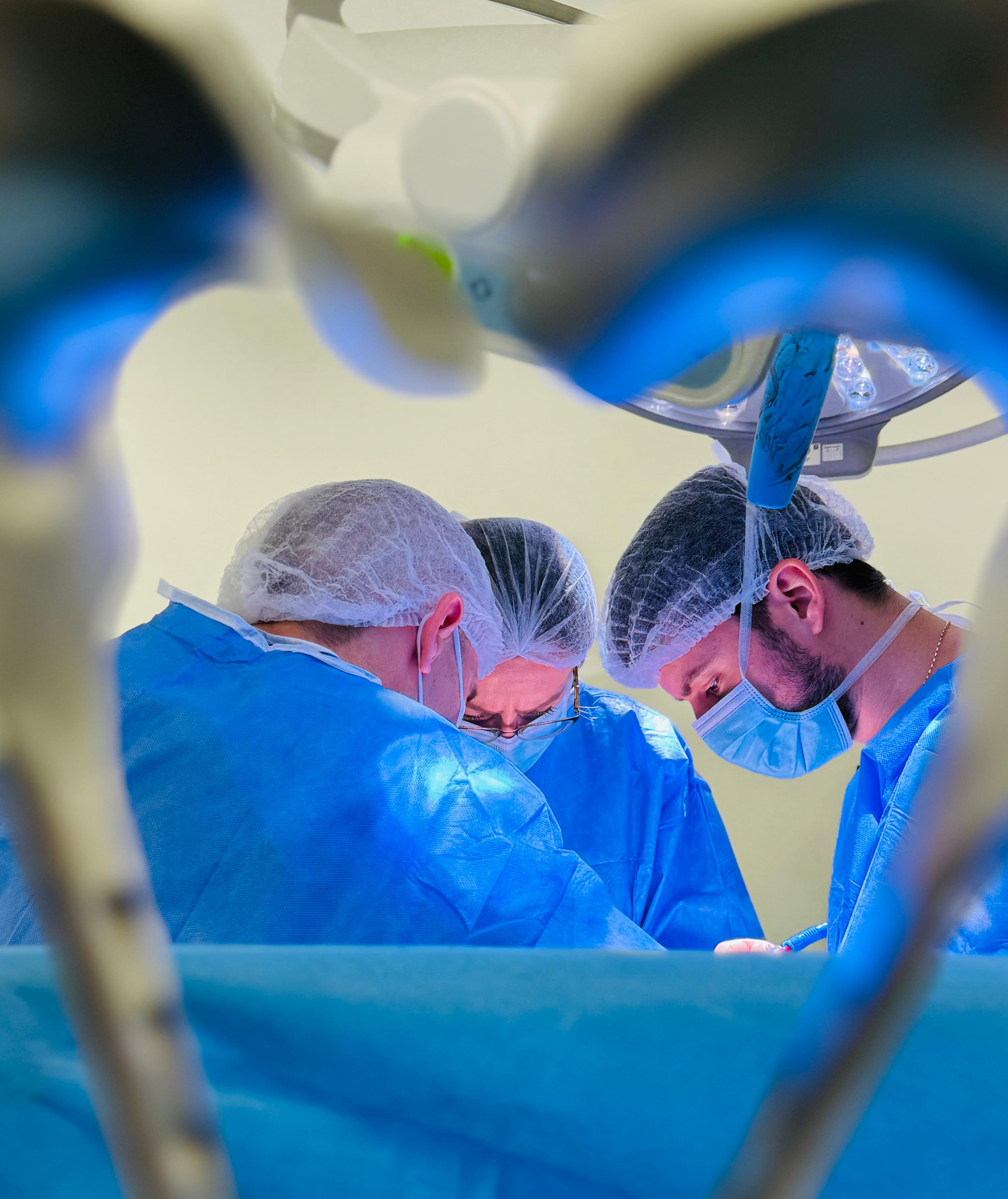
Modern technology for more safety, less trauma
The colon, the rectum, and the gynecologic organs of the pelvis are not easy to operate on: the anatomy is complex, and the stakes are high. That is why safety begins with something essential — knowing as precisely as possible where the disease is and how far it extends, which modern imaging makes possible. In the operating room, advanced technology helps us work with more control and more precision.
Minimally invasive and robotic-assisted surgery can reduce the trauma to the body — which often means faster recovery, fewer complications, and an earlier return to further treatment after surgery, when it is needed. Cancer today is no longer what it once was: the chances of survival and cure are significantly higher when treatment is done correctly, as a team, and on time.
Below are the main operations I perform in colorectal surgery, pelvic surgery (including selected cases of gynecologic cancers), and proctology. The indication for each is established after a complete evaluation and modern imaging — and whenever indicated, we choose minimally invasive techniques, including robotic-assisted surgery, for greater precision and the fastest possible recovery.
Maximum precision in difficult anatomical spaces, with faster recovery
Robotic surgery is the most advanced form of minimally invasive surgery, performed through small incisions. It offers excellent visualization and highly precise instruments — especially valuable in the pelvis, around the rectum. It can reduce trauma to the tissues and allows fine dissection around the nerves. For the patient, this can translate into less pain and getting back on your feet sooner.
In many cases, it lowers the risk of complications and shortens the hospital stay. The indication is established individually, based on the diagnosis, your anatomy, and the stage of the disease. In the consultation, we discuss the benefits, the limits, and the alternatives (laparoscopic or open surgery). The goal remains the same: safe, oncologically correct treatment with good functional results.
You receive a clear plan for preparation, hospitalization, and postoperative recovery.
What you need to know
Book a specialist consultation
If you have low or very low rectal cancer and want a complete evaluation of your options — including the possibility of sphincter-preserving surgery — you can book a consultation with Dr. Octavian Popescu at Memorial Hospital, Bucharest.
What to bring to the consultation:
Biopsy / histopathology result
Pelvic MRI (CD + written report)
CT or PET-CT (if available)
Colonoscopy report
A list of your current treatments and other medical conditions

Dr. Octavian Popescu realizeaza operatii oncologice in Memorial Hospital Bucuresti din anul 2022.
Membru in Colegiul Medicilor din Romania.
DGAV (Deutsche Gesellschaft für Allgemein und Viszeralchirurgie)
DGK (Deutsche Gesellschaft für Koloproktologie)
DKG (Deutsche Krebsgesellschaft)
ESCP (European Society of Coloproctology)
Adresă consultatii
95-101st Șerban Vodă Street, Bucharest
Telefoane utile
Reception – 0758.084.772
Call Center – 0219676
© 2025 · Dr. Octavian Popescu · Medic chirurg specialist inscris in Colegiul Medicilor din Romania.